
Set up VPN on Android.
Install VPNClient and connect using the VPN credentials supplied after purchase.
Install, sign in and connect.
Before you start: Have an active VPN account, your VPN credentials and an internet connection ready.
Install and open VPNClient.
Install the app from Google Play, then open VPNClient on your Android device.
Sign in with your VPN credentials.
Enter the VPN username and password supplied after purchase. Use your VPN credentials here, which may differ from your website login.
Choose a server and connection option.
Open the server list and choose a location. Start with a nearby server, or select the country you need.
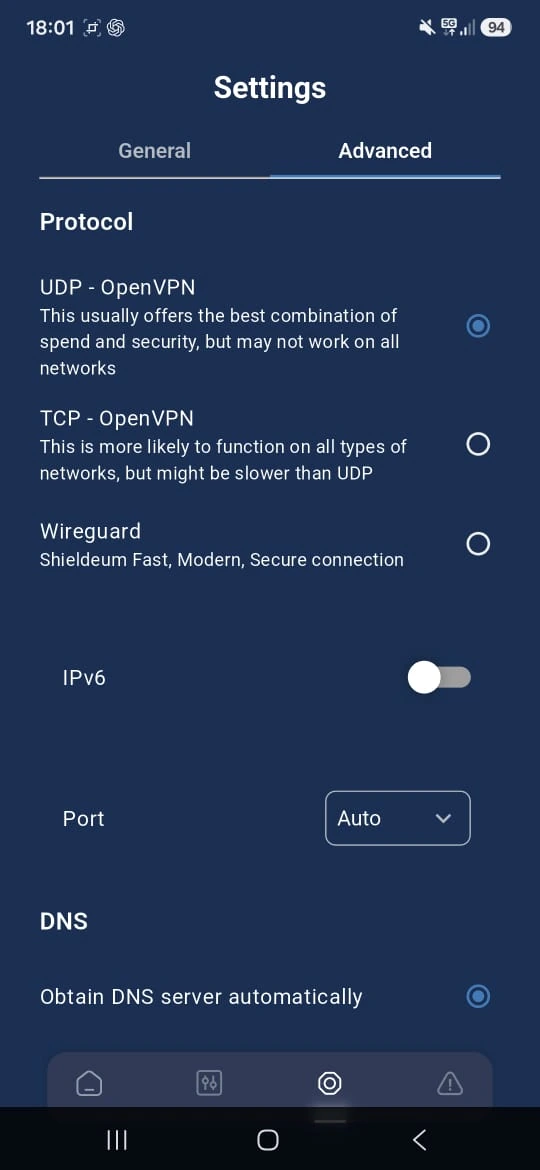
In Settings → Advanced, choose WireGuard as the recommended starting option.
View connection options and settings ↓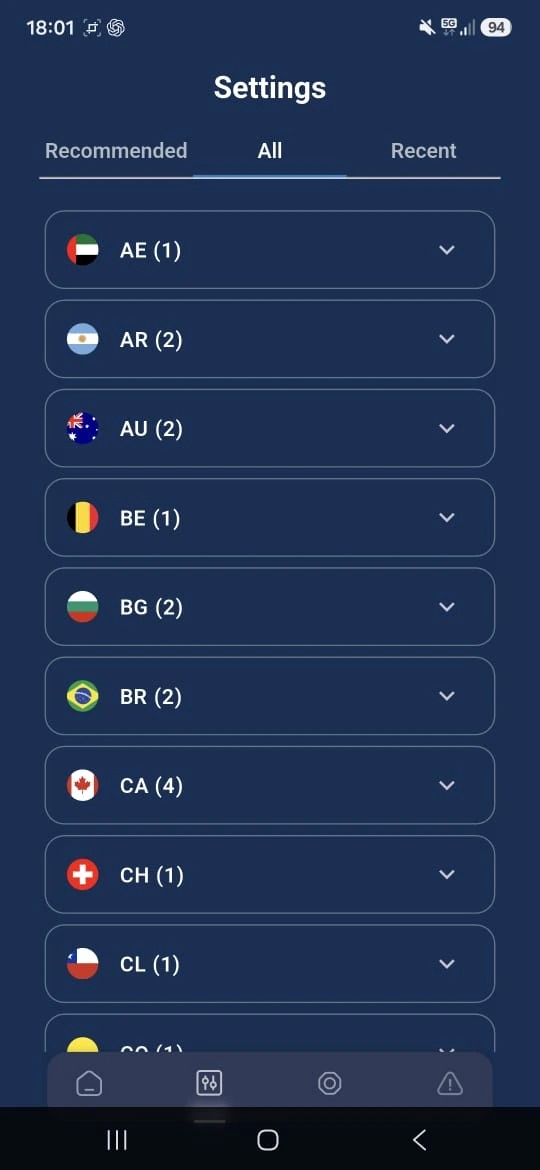
Choose a country and server. Tap image to enlarge. Connect and confirm the connection.
Tap Start. When Android asks to allow VPNClient to set up a VPN connection, approve the request.
The connection screen shows your selected server, a running connection timer and your VPN IP address. The control changes to Stop while connected.
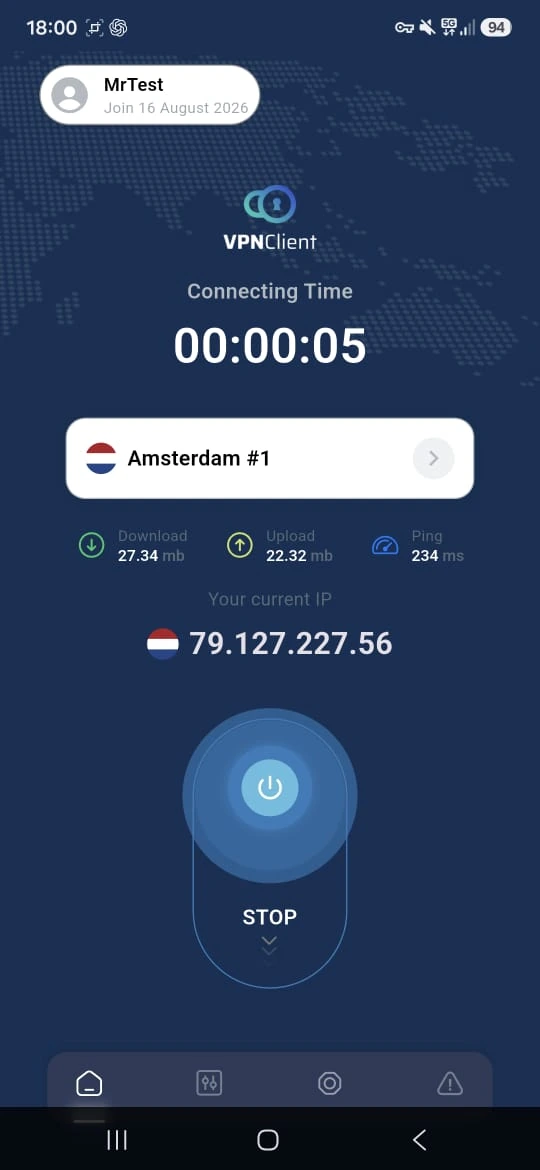
Your active VPN connection. Tap image to enlarge.
Connection options and settings
Connection options
Under Settings → Advanced, you can switch between WireGuard, UDP OpenVPN and TCP OpenVPN. If one option will not connect, try another.
Network Lock
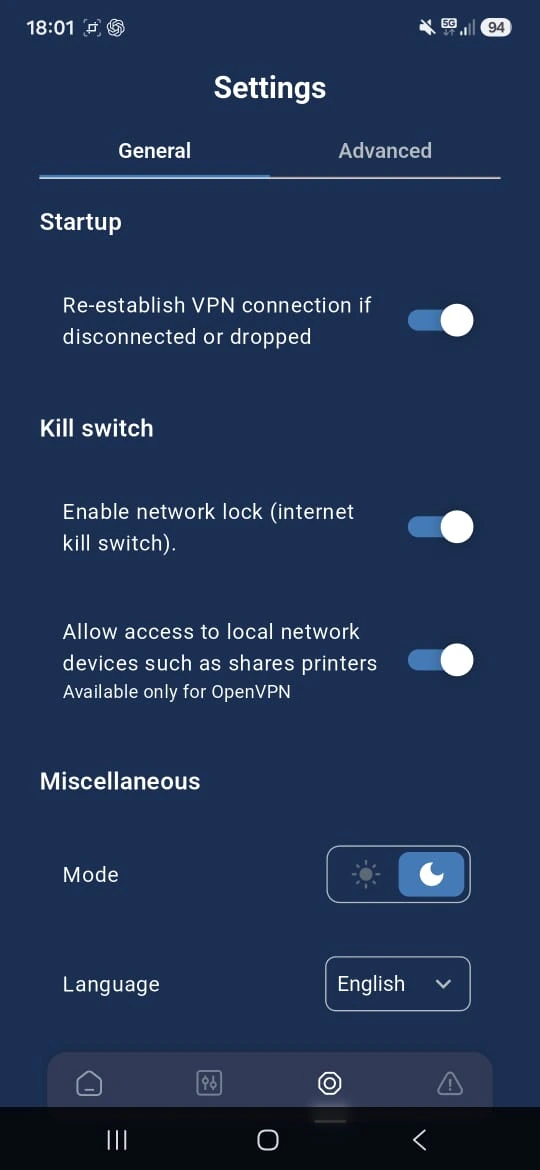
Under Settings → General, Network Lock is the internet kill switch setting. Check that it is enabled before relying on it to restrict internet access when the VPN connection drops.
Reconnect after a dropped connection
General settings also includes “Re-establish VPN connection if disconnected or dropped.” Enable this option if you want the app to try reconnecting after a drop.
Advanced settings
Leave IPv6, port and DNS settings unchanged unless you are troubleshooting or following specific setup instructions.
Can’t use Google Play?
Download VPNClient directly using the APK link below. Open the downloaded file; Android may ask you to allow your browser or file manager to install apps from this source. Allow it for this installation and follow the prompts.
Download VPNClient APKAfter installation, return to the sign-in step above.
Prefer manual OpenVPN setup?
You can use an OpenVPN-compatible Android client instead of VPNClient. Generate an OpenVPN configuration in your VPN dashboard, download it and import it into your client.
OpenVPN configuration generator →Having trouble connecting?
- Check your VPN credentials.
- Restart the app.
- Try another server.
- Try another available connection option.
- Compare Wi-Fi and mobile data, and note any error.
Need a VPN account? Choose a plan →